
Can You Really Buy a House in Arizona With $0 Down?
Can You Really Buy a House in Arizona With $0 Down?
I posted something recently about buying a house with $0 down, and the conversations that came from it reminded me how many people still think they need 20% saved before they can even talk to a lender.
You don't.
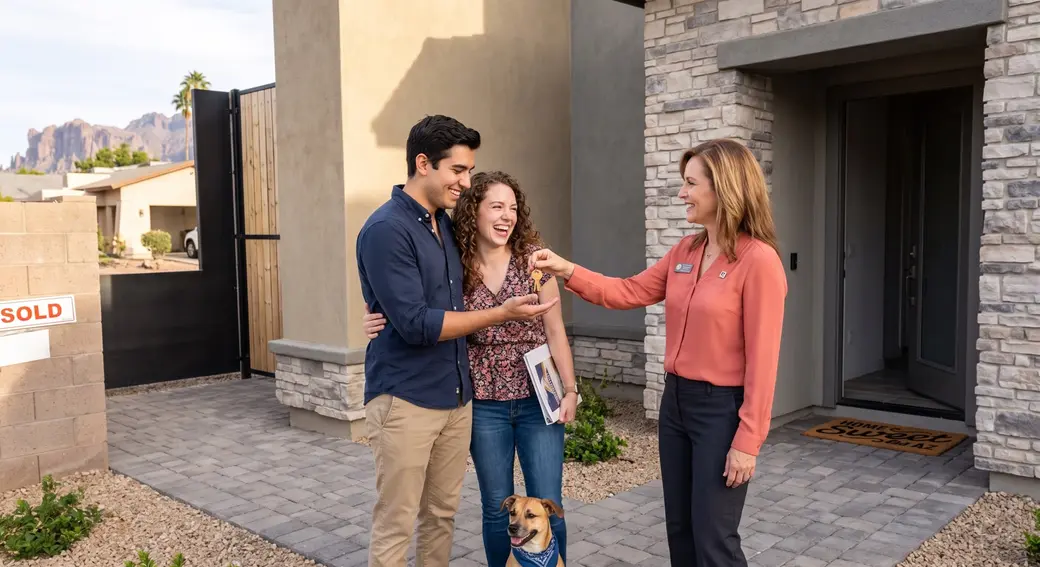
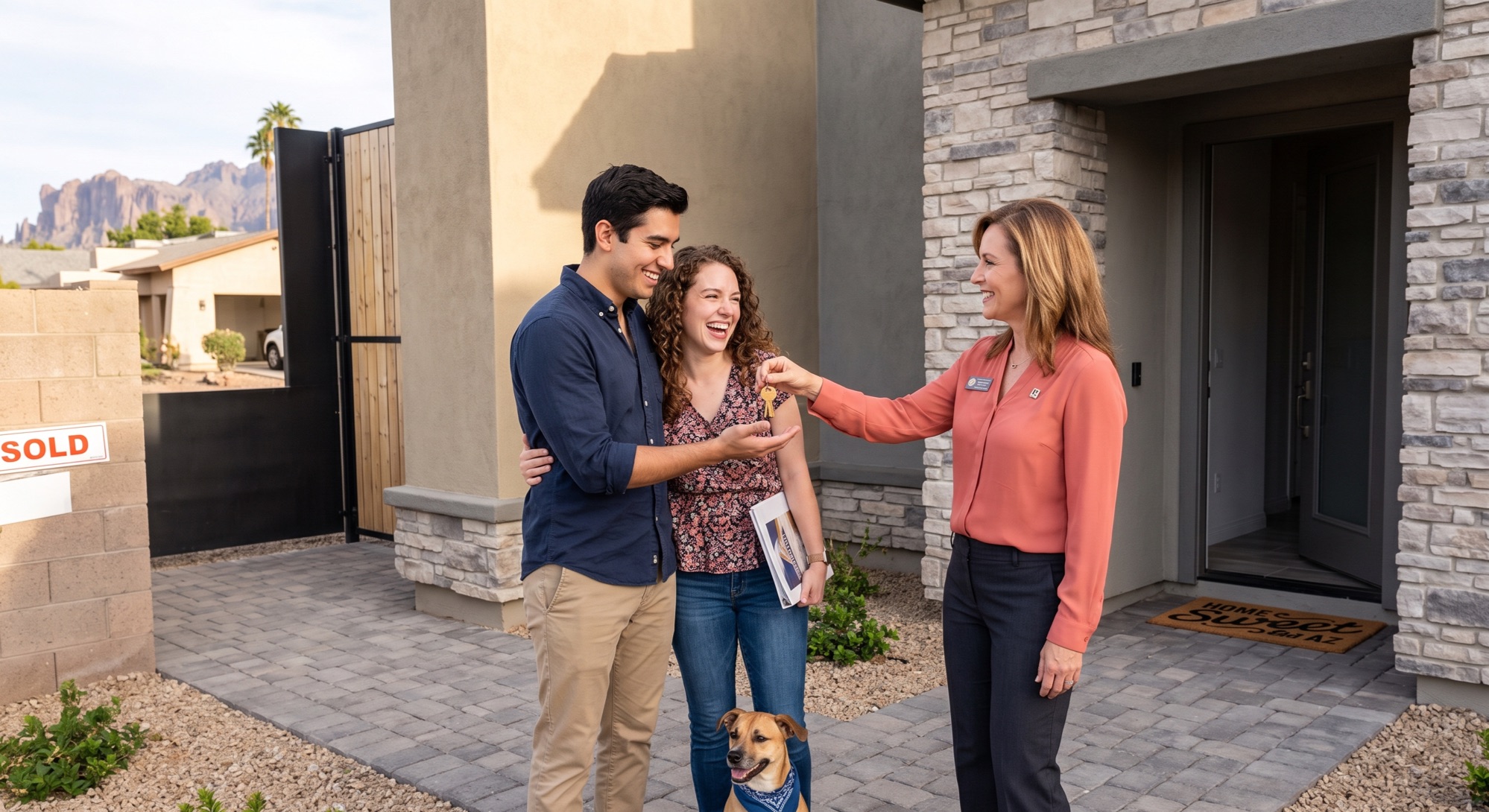
I've had quite a few buyers purchase homes with no down payment lately, and no, they weren't all using VA loans. I've had first-time buyers use down payment assistance and grant programs, negotiate their closing costs into the deal and get all the way to closing without bringing a down payment with them.
I've even had buyers get their earnest money back at closing.
Does that mean everyone can buy a house with nothing saved? No. And I don't want to turn this into one of those “BUY A HOUSE WITH $0!!!” posts that conveniently leaves out everything that has to happen for that to work.
But if you've been sitting on the sidelines because you think you need $60,000 in the bank before you're allowed to start looking at a $400,000 house, we should probably talk about where that number came from.
Because you may be a lot closer than you think.
No, You Don't Need 20% Down to Buy a House
I still hear this all the time.
Someone will tell me they want to buy eventually, but they're saving for the 20% down payment. On a $400,000 house, that's $80,000, so you can imagine how far away buying a home feels when you're starting with $5,000 or $10,000 saved.
Twenty percent down has benefits, but it is not the minimum down payment for most buyers.
An FHA loan, for example, allows a minimum down payment of 3.5% for qualifying borrowers. On a $400,000 house, that's $14,000, not $80,000.
And even that $14,000 doesn't necessarily have to come entirely from your savings account. You can get it as a gift.
There are down payment assistance programs and grants that can help eligible buyers cover some or all of the required down payment. Some programs are geared toward first-time buyers, while others have different eligibility requirements based on income, occupation, location, loan program and other factors.
I've watched the light bulb go on for buyers when we start talking about this because suddenly we're not discussing a house they might be able to buy five years from now.
We're talking about whether they could actually buy one now.
I've Had Multiple Arizona Buyers Purchase With $0 Down
These aren't hypothetical loan scenarios I found online.
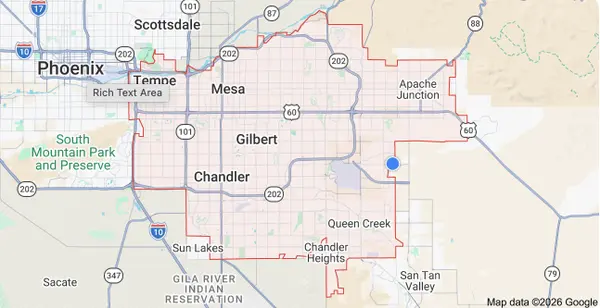
I currently have a first-time buyer shopping in Gilbert for a home up to $400,000. She doesn't have a down payment saved, so we're using a grant program.
I recently had buyers purchase a two-year-old home in Apache Junction for about $420,000 without a down payment.
I've had a first-time buyer purchase in Mesa around $375,000 using down payment assistance. We negotiated for the seller to cover the closing costs, so again, no down payment.
And yes, I work with VA buyers too. I currently have one shopping up to $800,000 using the VA benefit, which can offer eligible borrowers 100% financing.
These buyers have different incomes, different budgets and different financing. That's why I don't hear “I don't have a down payment” and automatically respond with “Okay, call me when you save one.”
Let's figure out what you actually qualify for first.
Down Payment Isn't the Only Money You Need to Think About
This is where I want to put a giant asterisk next to the phrase “$0 down.”
Zero down does not mean there will never be another expense associated with buying the house.
My buyers still get an independent home inspection, and they generally pay for that out of pocket. Depending on the transaction and loan, the appraisal may also be an upfront expense. There is earnest money when we write an offer, although I've had buyers receive their earnest deposit back at closing because the rest of the transaction was structured to cover their required costs.
Then there are closing costs.
This is the part that scares buyers after they finally realize they don't need 20% down. They start looking at lender fees, title costs, prepaid taxes, insurance and everything else involved with closing and think, “Okay, never mind. I still need a ton of money.”
Maybe.
Or maybe we negotiate some of it.
Seller Concessions Can Completely Change the Math
We're getting seller concessions in this market.
That matters, especially for a buyer who has enough income to comfortably afford the monthly payment but doesn't have tens of thousands of dollars sitting around for a down payment and closing costs.
Depending on the loan and transaction, we may be able to negotiate for the seller to contribute toward allowable buyer closing costs. I've also had sellers cover a home warranty for my buyers.
And sometimes I'd rather negotiate concessions than push for another small reduction in the purchase price.
Buyers understandably love hearing that we're going to get the price down. It feels like a win, and obviously I'm going to negotiate the price when the numbers support it.
But let's say I can get you $5,000 off the purchase price or structure $5,000 in seller concessions that can be used toward allowable closing costs or a rate buy-down.
Those are not necessarily equal wins.
A modest reduction in the sales price may barely change your monthly payment. Using available concessions strategically to reduce the amount you need at closing or, when the loan structure allows it, buy down the interest rate may have a much bigger effect on your actual finances.
That's why I care about the whole deal, not just being able to say we got $5,000 off the house.
The Monthly Payment Is Often the Bigger Problem Right Now
For a lot of my buyers in 2026, we've figured out the cash-to-close problem.
The payment is harder.
The average 30-year fixed mortgage rate was 6.76% as of September 10, 2026. Rates move constantly and your actual rate depends on your loan, credit, lender and other factors, but there's no pretending financing in the upper 6% range doesn't affect affordability.
So sometimes our search starts with, “How do I come up with the down payment?” and we solve that part pretty quickly.
Then we have to decide what payment actually feels comfortable.
This is where the house price, interest rate, property taxes, homeowners insurance, HOA and mortgage insurance, if applicable, all start to matter.
I don't want to get you approved for the maximum amount a lender says you can technically borrow and then have you afraid to go to dinner because your house payment ate your entire budget.
Getting approved and being comfortable are two different things.
Down Payment Assistance and Grants Aren't All the Same
I don't want to give you a giant list of down payment assistance programs here because programs change, funding changes and eligibility changes. A blog you find six months from now shouldn't be the thing you use to decide which mortgage program you're getting.
But these programs absolutely exist.
Arizona currently has HOME Plus, a statewide home buyer down payment assistance program available throughout Arizona. The Arizona Department of Housing also has the Arizona is Home program for eligible first-time buyers in Maricopa and Pima counties. Arizona is Home currently defines a first-time buyer as someone who hasn't owned real estate during the previous three years and has income requirements tied to area median income.
There are also programs available through individual lenders and organizations, and some are designed around particular occupations or communities.
The point isn't that you're guaranteed to qualify for one.
The point is that we shouldn't assume you don't.
First Responders, Teachers, Nurses and Other Community Heroes May Have More Options
This is one of the reasons I particularly want first responders and other community employees to have the financing conversation before deciding they can't buy.
I've worked with a Community Heroes program that can provide qualifying borrowers with 100% financing and no PMI. The program is available to eligible professions including first responders, teachers, nurses, doctors and city employees.
That can completely change the timeline for someone who earns enough to afford a mortgage but hasn't managed to save $30,000 or $40,000 while also paying rent, car payments, daycare, groceries and everything else life keeps charging us for.
And that's a buyer I see all the time.
They're responsible. They have steady employment. They're paying their bills. They may already be paying rent that's comparable to a mortgage payment, but they've convinced themselves homeownership isn't available to them because their savings account doesn't have a giant number in it.
Sometimes they're right that we need more time.
But sometimes they're not.
What If You Only Have $5,000 Saved?
Talk to a lender.
That's my answer.
I'm not going to look at the number in your savings account and tell you that you can't buy a house without knowing anything else about your finances.
Now that I'm also licensed as a mortgage loan originator, I can start that conversation with you from the financing side too. We can look at whether there's a program that could work, whether your income and debts support the payment you're targeting, and whether there are credit issues we need to address first.
Maybe you're ready.
Maybe we look at everything and realize you need six months to pay down a credit card, improve your credit or build a little more savings.
That's still useful.
I'd rather tell you, “Here's what needs to happen over the next six months,” than have you spend three years assuming the answer is no because someone told you that you needed 20% down.
It might be not yet.
That's very different from no.
I Still Don't Want You Emptying Your Bank Account to Buy a House
There's another side to all of this that doesn't get nearly as much attention.
Just because we can structure a purchase with very little cash doesn't mean I want you draining every dollar you have to get the keys.
Homes cost money after closing too.
The water heater doesn't care that you just spent your savings on a down payment. Neither does your car when it decides it needs tires the week after you move.
This is actually one reason a grant or down payment assistance program can make sense for the right buyer. If using assistance allows you to keep some emergency savings instead of dumping everything into the purchase, I want us to compare that option.
But we also need to understand the terms of the assistance.
Some assistance is a grant. Some may be structured as a second mortgage. Some has repayment requirements or restrictions. Some may affect the interest rate or other parts of your financing.
“Free money” is not enough information.
We need to know exactly what you're getting and what you're agreeing to.
So, Can You Buy a $400,000 House With $10,000 Saved?
Potentially, yes.
You may even be able to buy one with less.
But I'm not going to tell you that because I plugged $400,000 into an online mortgage calculator and found a loan program with a low down payment.
Your income matters. Your debts matter. Your credit matters. The property matters. The monthly payment matters. The loan program matters. The assistance program matters.
And then we have to find a house where we can put the rest of the pieces together.
That's what happened with the buyers I've helped purchase with no down payment. It wasn't one magic program that worked for everybody. One buyer used down payment assistance. Another used a grant. My VA buyers have a completely different financing path. Then we negotiated seller concessions where they made sense and structured the transaction around the individual buyer.
That's a lot different from saying everybody can buy a house with $0.
But it's also a lot different from saying you need $80,000 to buy a $400,000 house.
FAQs About Buying a Home With Little or No Money Down in Arizona
Do I need 20% down to buy a house in Arizona?
No. Twenty percent down is one option, not a universal requirement. FHA financing can allow qualifying borrowers to purchase with as little as 3.5% down, and other loan and assistance programs may require less. VA financing can offer eligible borrowers a zero-down option.
Are there down payment assistance programs for Arizona first-time buyers?
Yes. Arizona has programs including HOME Plus, which is available statewide, and Arizona is Home, which currently provides assistance to qualifying first-time buyers in Maricopa and Pima counties. There are also lender-specific and other assistance programs. Eligibility and program terms vary, so the right program depends on your individual finances and where you're buying.
Can a seller pay my closing costs?
A seller may be able to contribute toward allowable buyer closing costs, subject to the limits and requirements of your loan program. In the current market, I've successfully negotiated seller concessions for a number of my buyers. How much we ask for and how we use those concessions depends on the individual transaction.
Can I buy a house with $0 out of pocket?
I've had buyers reach closing without bringing a down payment and even receive their earnest money back, but that does not mean buying a home has literally zero expenses. Inspection and appraisal costs are examples of expenses buyers may pay before closing. The final amount depends on the financing, assistance, negotiated concessions and individual transaction.
Should I wait until I have more money saved before talking to a lender?
No. Have the conversation first. If you're not ready, you'll know what needs to change and can build a plan around an actual goal instead of guessing. And if you qualify for a program you didn't know existed, you may discover that you don't need to wait nearly as long as you thought.
Before You Decide You Can't Afford to Buy, Find Out
If you've been telling yourself, “I'll buy when I finally have 20% saved,” please don't let an assumption make the decision for you.
I have buyers shopping for homes in Gilbert right now without a down payment saved. I've helped buyers purchase in Mesa and Apache Junction using assistance and seller concessions. I've worked with first responders and other community heroes who had financing options they didn't know existed.
Some people who reach out aren't ready yet. That's okay. We figure out why, make a plan and get them moving in the right direction.
Others find out they've been waiting for a down payment they never actually needed.
If you're thinking about buying in Mesa, Gilbert, Queen Creek, San Tan Valley or Apache Junction and the down payment is the thing stopping you, start with the numbers. We can figure out whether buying now makes sense, which programs you may qualify for and, if you're not ready yet, exactly what needs to happen before you are.
Categories
Recent Posts
"Real estate isn’t just about buying and selling houses—it’s about creating opportunities, building wealth, and turning dreams into reality. Everyone deserves a place to call home, and I’m here to make that happen."